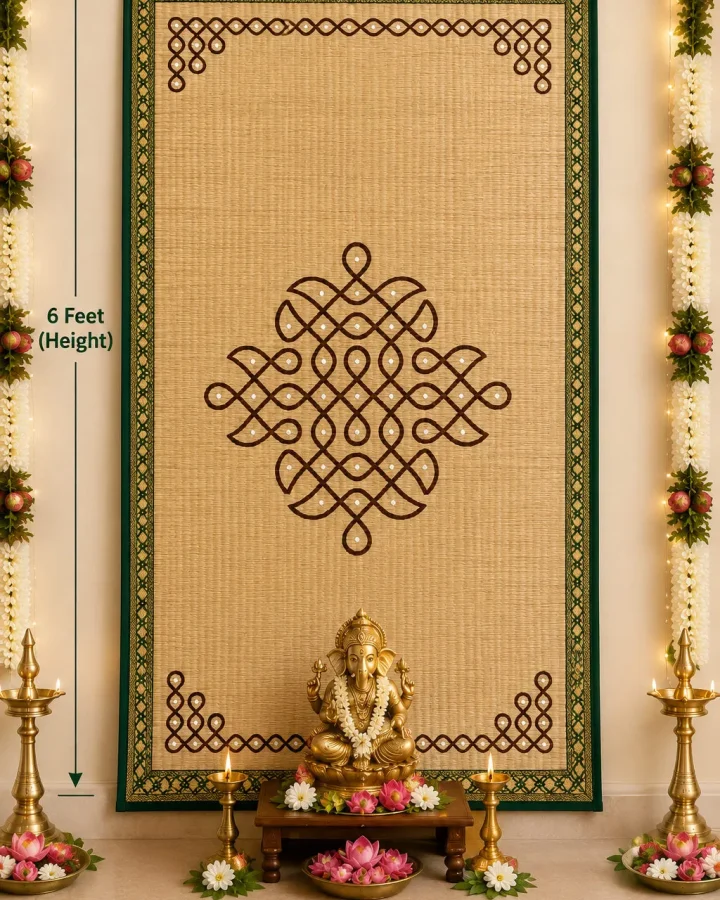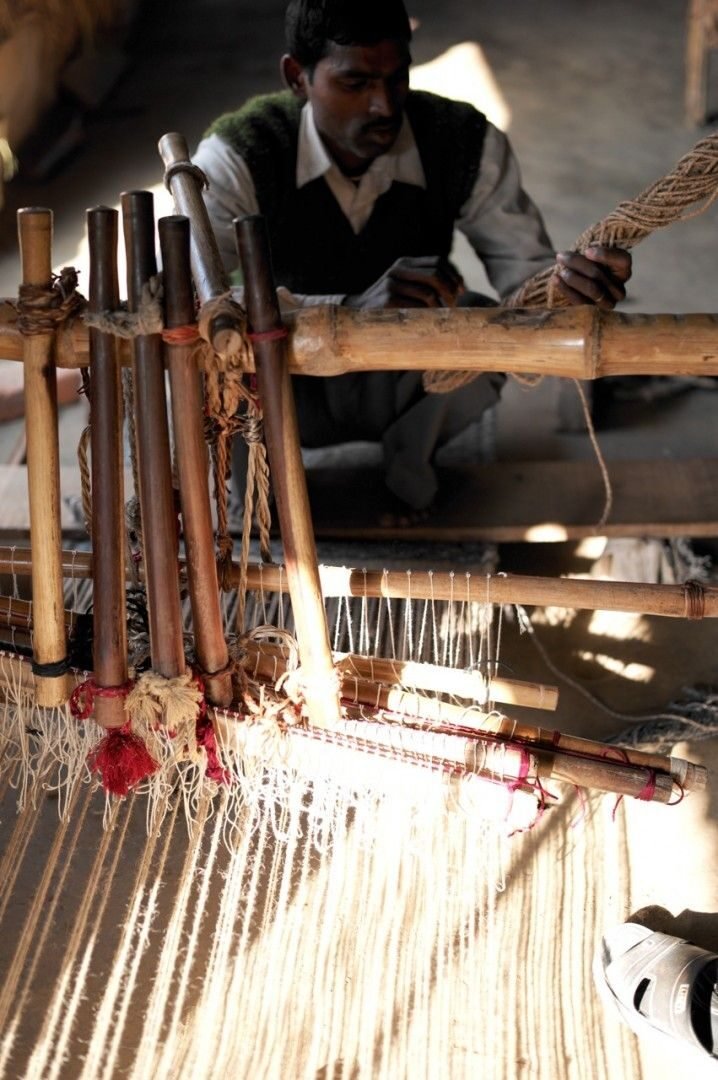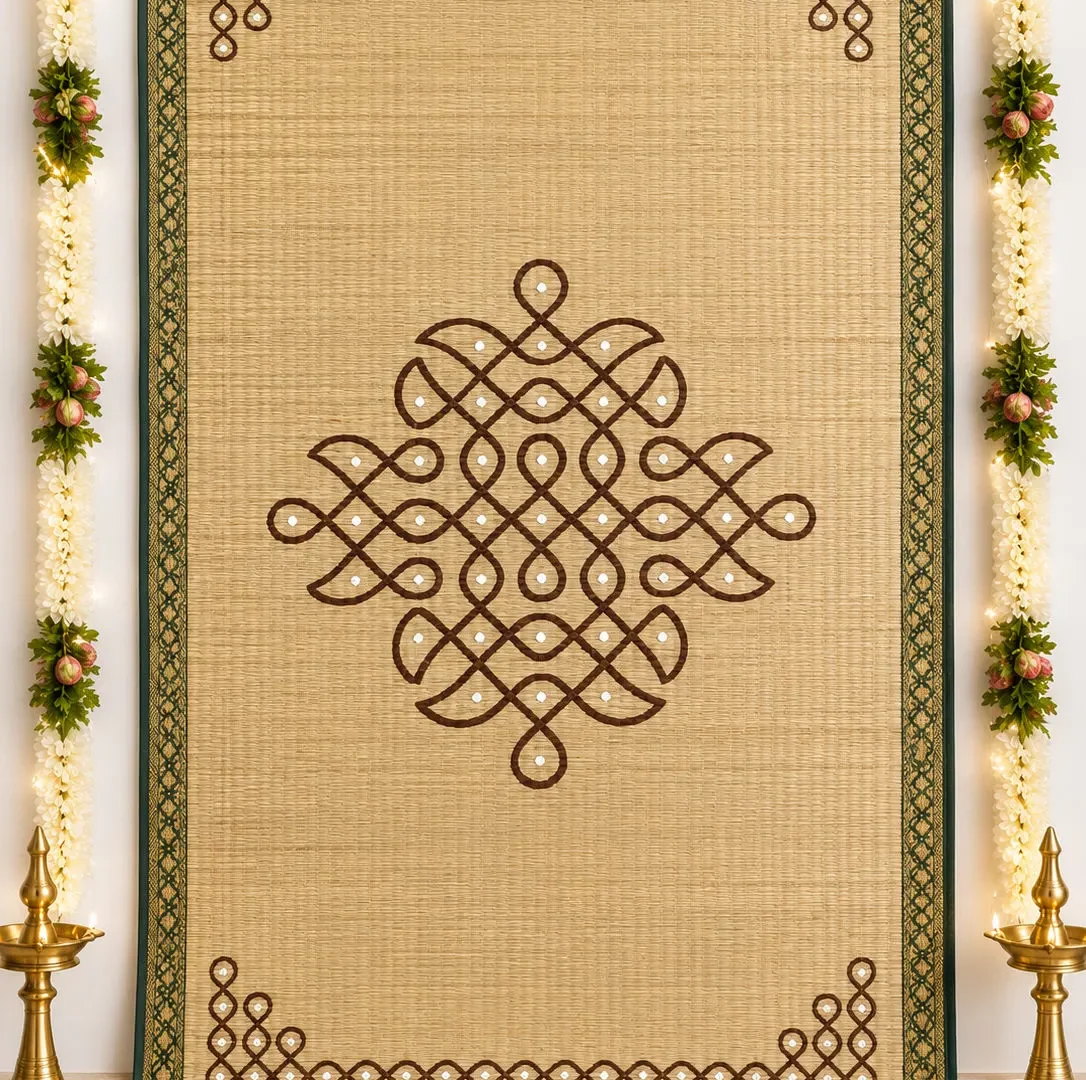
Lotus, kolam and the Govinda Namam are the three pattern families that run through everything we weave. None of them are printed or stencilled — each one is counted out on the loom, thread by thread, the same way it has always been done.
Lotus
The lotus is the pattern most people ask for first — stems, buds and open blooms worked in a contrasting thread against the natural weave. It reads well as a backdrop on its own, or paired with the Namam for a fuller, more festive panel.
Kolam
The kolam patterns are geometric — loops and diamonds built from a grid the weaver holds in memory, the same discipline as a rangoli drawn fresh at the doorstep every morning. Ours come in red and in a warmer brown, both finished with a mirror-work dot at each turn.
Govinda Namam
The tall white-and-red mark at the centre of a few of our mats is the Govinda Namam, a Vaishnavite symbol usually seen on temple gopurams and pillars. Set above a bed of lotuses, it turns a plain backdrop into something closer to a shrine wall.
Why memory, not a pattern sheet
A stencil would make every mat identical. Working from memory means the spacing shifts a little from one mat to the next — the same reason no two rangoli look quite alike even when the base pattern is the same. That’s not a flaw we’re trying to fix. It’s the point.